

Buying a villa in Spain no longer leads to a residence permit. The investor route known as the golden visa, which gave residence for a property purchase of €500,000 or more, closed to new applicants on 3 April 2025. If you are a British, American, Gulf or other non-EU buyer and want to spend more than holiday periods in Spain, you now need one of the general routes, and the right one depends on whether you will work, retire or live on your income.
Below: what happened to the golden visa, then the routes villa buyers use in 2026 (EU registration, the non-lucrative visa, the digital nomad permit and, for people moving for a job, the Beckham law tax regime). Each rule links to the law or official page we checked in November 2026.
The golden visa: what ended and what happens to current holders
The investor visa was created by Law 14/2013. It covered several kinds of investment, among them Spanish property worth at least €500,000 per applicant, €1M in shares or bank deposits, or €2M in government debt (KPMG legal alert). Organic Law 1/2025 of 2 January left articles 63 to 67 of Law 14/2013 without content from 3 April 2025, so there is now no investor residence route at all, whatever the asset (Law 14/2013, consolidated text, BOE; Organic Law 1/2025).
Two transitional rules protect people who were already in the system:
- Applications filed before 3 April 2025 are decided under the rules in force on the day they were filed.
- Visas and permits valid on that date keep their validity for the period they were issued for, and renewal applications are decided under the rules in force when the first permit was granted.
Under those rules renewals ran for five years while the investment was kept (KPMG, above), so current holders can keep renewing. New buyers cannot use the route.
Owning a villa gives you the right to use it and to visit. It does not give you the right to live in Spain. Visitors from the UK and other non-EU countries without a residence permit can stay in the Schengen area for up to 90 days in any 180-day period (GOV.UK).
Plenty of owners are happy with 90 days and use their villa for long spring and autumn stays. The villas below are the ones still available.
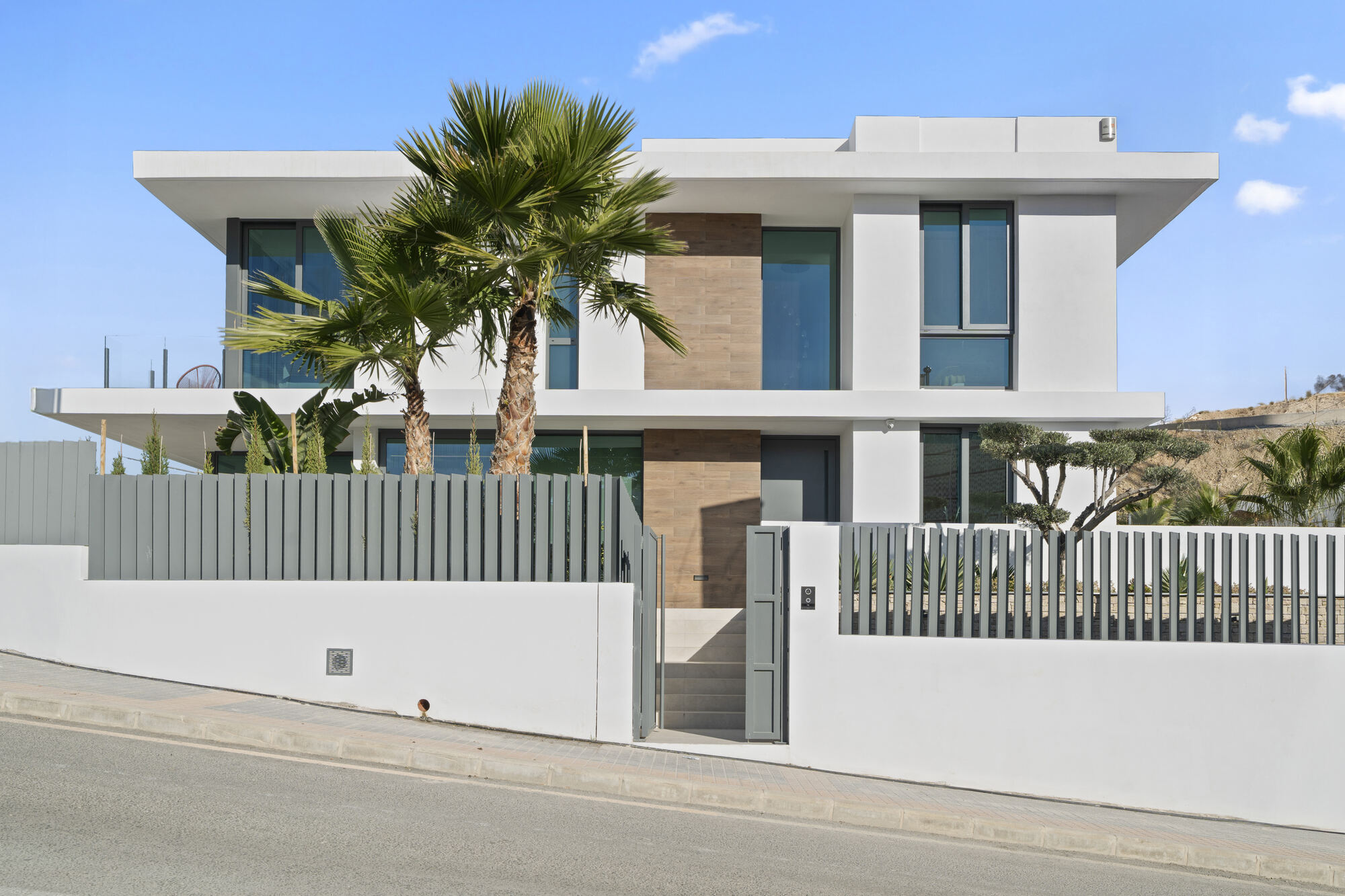
Villas for sale in Rincón de Loix, Benidorm


EU and EEA citizens: registration, not a visa
Citizens of EU and EEA countries have free-movement rights. Under Royal Decree 240/2007 they may live in Spain for more than three months if they work here, or if they have enough resources not to become a burden on Spanish social assistance plus health insurance covering all risks in Spain (Royal Decree 240/2007, article 7). In practice this means registering as a resident rather than applying for a visa.
British citizens who moved to Spain after 31 December 2020 are treated as non-EU nationals. Those who were living in Spain before 1 January 2021 keep the rights of the Withdrawal Agreement (GOV.UK, Living in Spain).
The non-lucrative residence visa
This is the usual route for retirees and for people living on pensions, investments or income from abroad. It is regulated in articles 60 to 64 of the immigration regulation approved by Royal Decree 1155/2024, in force since 20 May 2025 (Royal Decree 1155/2024, BOE).
Income or savings
You must show monthly means equal to 400% of IPREM, Spain’s benchmark income index, plus 100% of IPREM for each family member you support (article 62). IPREM has stayed at €600 a month since the 2023 budget, and that is still the figure for 2026 (SEPE, 2026 amounts). That works out at:
- €2,400 a month for the main applicant (€28,800 for a one-year permit);
- €600 a month more for each dependant, so €3,000 a month for a couple.
The means must cover the full period of the permit, and the ministry accepts any form of proof, listing property titles, certified cheques and bank certificates among them (Ministry of Inclusion, information sheet 6).
Other conditions
- Public or private health insurance with an insurer authorised in Spain.
- No criminal record in Spain or in the countries where you lived in the last five years, plus a medical certificate.
- You apply at the Spanish consulate for your place of residence. The first permit lasts one year from the date you enter Spain, and you request your foreigner’s identity card (TIE) within a month of arrival.
- Renewals are for two years and require you to have lived in Spain for more than 183 days in the calendar year (article 64).
The permit does not allow you to work in Spain, and the ministry’s own FAQ confirms that remote work done while holding it does not count as lawful work (Ministry of Inclusion, teleworker FAQ, question 13).

The international teleworker (digital nomad) permit
Law 28/2022 added a permit for non-EU nationals who work remotely for companies based outside Spain, using only computer and telecoms systems (Law 14/2013, articles 74 bis to 74 quinquies). The main conditions are:
- A degree from a recognised university, business school or vocational college, or at least three years’ professional experience.
- The company you work for has been operating for at least a year, and your employment or contract with it has lasted at least three months.
- Employees may only work for the foreign company. Self-employed holders may also work for Spanish clients, up to 20% of their total professional activity.
- Income of 200% of the minimum wage (SMI) for the holder, 75% more for a first family member and 25% for each further one (teleworker FAQ, above).
The 2026 SMI is €1,221 a month paid 14 times, or €17,094 a year (Royal Decree 126/2026). On the annual figure, 200% is €34,188 a year, about €2,849 a month. The ministry’s FAQ quotes the €1,221 monthly figure as its reference, so ask your consulate which base it applies before you file.
Spanish Social Security registration is compulsory (employees may instead bring a certificate of cover under a bilateral agreement). Applying from abroad, you get a visa valid for up to one year. From inside Spain, or before the visa expires, you can apply for a residence permit of up to three years, renewable for two years at a time. Family members who join you may work without restriction.
The Beckham law: a tax regime for people who move for work
The special regime for workers posted to Spain is a tax option, not a residence permit, and it sits in article 93 of the Personal Income Tax Act (Law 35/2006, article 93). It is open to people who become Spanish tax residents because they move here and who were not resident in Spain in the previous five years, where the move is due to:
- an employment contract with a Spanish employer, a posting by your employer, or remote work (holders of the teleworker visa qualify);
- becoming a director of a company (with limits if it is an asset-holding company you control);
- an entrepreneurial activity approved under Law 14/2013, or highly qualified work for start-ups.
For the year of the move and the next five, you pay Spanish income tax under non-resident rules: employment income is taxed at 24% up to €600,000 and 47% above, all of it treated as Spanish, while most foreign investment income stays outside Spanish tax. For wealth tax you are taxed only on assets located in Spain. You opt in on Form 149 within six months of the start date shown on your Social Security registration (Income Tax Regulation, article 116; Agencia Tributaria, Form 149).
The routes side by side
| Route | Suits | Main requirement in 2026 | Work in Spain | Duration |
|---|---|---|---|---|
| EU/EEA registration | EU and EEA citizens | Work, or sufficient resources plus full health insurance | Yes | No visa needed |
| Non-lucrative visa | Retirees, people living on investments | €2,400 a month (400% IPREM) plus €600 per dependant; private health cover | No | 1 year, then 2-year renewals (over 183 days a year in Spain) |
| Teleworker (digital nomad) | Remote employees and freelancers of non-Spanish firms | 200% of SMI; degree or 3 years’ experience; Social Security registration | Remote only; freelancers up to 20% Spanish clients | Visa 1 year; permit up to 3 years, renewals of 2 |
| Beckham regime (tax only) | People moving for a job, directorship or start-up | Not tax resident in the previous 5 years; Form 149 within 6 months | Depends on your permit | Year of arrival plus 5 years |
| Golden visa | Existing holders only | Closed to new applications since 3 April 2025 | Yes, for holders | Renewals under original rules |
Residence also counts towards Spanish nationality. The general requirement is ten years of legal, continuous residence immediately before the application, cut to two years for nationals of Ibero-American countries, Andorra, the Philippines, Equatorial Guinea and Portugal (Civil Code, article 22). Living here for more than 183 days in a calendar year also makes you a Spanish tax resident, taxed on worldwide income (Law 35/2006, article 9), so model the tax position before you apply.
Planning residency around a villa at Villas de Loix
Villas de Loix is a group of 27 detached new-build villas with private pools in Rincón de Loix, Benidorm, at the foot of the Serra Gelada natural park. Completion is estimated for Q2–Q3 2027 (April–September 2027), and the payment plan is 20% fifteen days after the purchase contract (once anti-money-laundering checks are approved), 10% four months later and 70% at the notary on completion. Prices start at €1,080,000 before 10% VAT for a three-bedroom single-storey villa, with live figures on our prices and availability page.
That timetable gives non-EU buyers room to plan. Because the first non-lucrative year runs from the date you enter Spain, many buyers apply so that it starts when the keys are ready rather than while the villa is still being built. Until then, viewings and the purchase itself fit within the 90-day visitor allowance. If you are comparing premium villas for sale in Alicante on a longer stay, you can see the furnished Villa 25 (three bedrooms) and Villa 26 (four bedrooms, three levels with a lift), and judge the location for yourself: Levante beach is 1.7 km away and Alicante-Elche airport about 50–55 minutes by road.
Both show villas are finished and open for private viewings.
The two show villas open for private viewings
Frequently asked questions
Can I still get a golden visa if I buy a villa for more than €500,000?
No. The investor route was removed with effect from 3 April 2025. Only applications filed before that date, and renewals of permits that were already valid, are still processed under the old rules.
Can I spend six months a year in my villa without a visa?
Not as a non-EU national. Without a residence permit you are limited to 90 days in any 180-day period across the Schengen area. EU and EEA citizens have no such limit.
Can I work remotely on a non-lucrative visa?
No. If you work remotely for a company outside Spain, the teleworker permit is the route designed for you.
This article is general information as of November 2026. It is not legal, immigration or tax advice. Rules and figures change, and consulates may apply their own document checklists, so confirm your case with a Spanish immigration lawyer or tax adviser before you act.
